
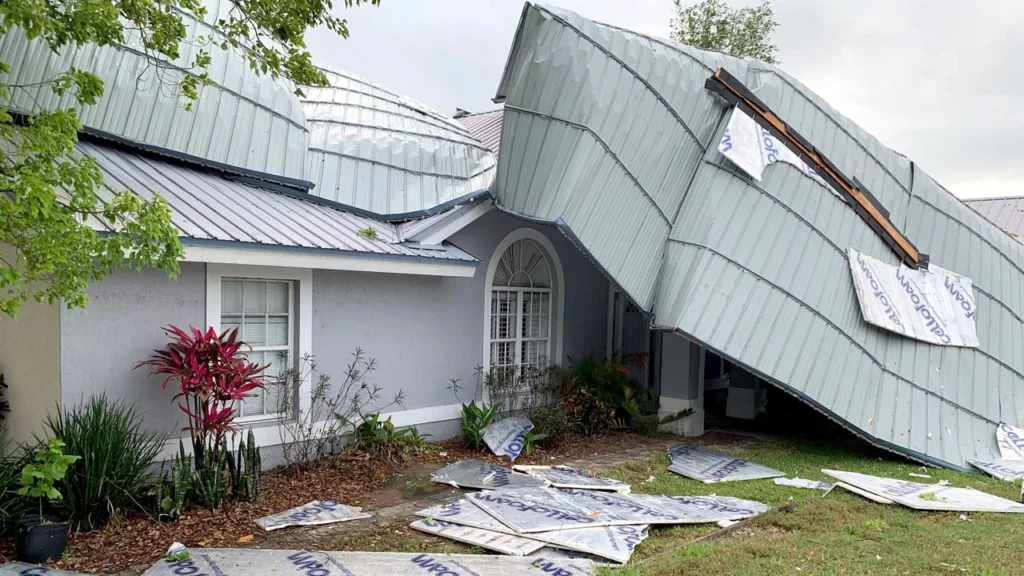
After a storm damages your roof, confirm the property is safe, then photograph everything before touching it. Apply temporary protection if rain is entering the home. Call your insurance company to open a claim, then request a free inspection from a licensed Florida roofing contractor.
A storm just passed, and your roof shows damage. You need clear answers on what Florida homeowners should do immediately after storm damage to their roofs. This is your storm-damaged roof next steps guide for Central Florida.
Is It Safe to Inspect Roof Storm Damage Right Away?
Not always. Check for hidden hazards before you inspect roof storm damage. A few minutes of caution can prevent a serious injury.
- Smell for gas near appliances or walls. Leave immediately and call 911 from outside if you notice an odor.
- Look for downed power lines around your property. Treat any line touching water or the house as live.
- Check ceilings before walking under them. Water-soaked drywall can collapse without warning.
- Stay outside if the roof shows major structural collapse. Wait for a licensed contractor to confirm it is safe.
Before the next storm arrives, review our Hurricane Season Roof Checklist for Central Florida Homeowners to prepare in advance.

Emergency Roof Damage Checklist for Florida Homeowners
Follow this emergency roof damage checklist for Florida homeowners in order. Skipping steps, especially repairs, can hurt your insurance claim.
Step 1: Document the Storm Damage
Photograph every part of the storm damage before cleanup starts. Insurance adjusters rely on documentation, not descriptions.
- Photograph the roof from the ground, including gutters and soffits.
- Photograph every affected room inside your home.
- Turn on your phone’s timestamp feature for dated photos.
- Record a short video walking through the damage.

Step 2: Apply Temporary Roof Protection
Florida policies require homeowners to prevent further damage. Temporary roof protection in Florida means covering open areas with a secured tarp.
A proper tarp extends at least three feet past the damaged area. Secure it tightly so wind cannot lift it.
Tarping is not a permanent repair. It only stops water until a licensed contractor completes the real fix.
If the roof pitch is steep or the damage covers a large area, contact Big Sky Roofing’s emergency tarp services so a licensed team can secure it for you.

Step 3: Start Your Roof Insurance Claim
Follow these roof insurance claim steps in Florida as soon as your photos are ready. Florida law currently requires most claims to be filed within one year of the loss date.
- Call your insurance carrier’s claims line.
- Have your policy number and property address ready.
- Describe the damage and the date it occurred.
- Write down your claim number immediately.
For a deeper walkthrough of this process, read our Florida Homeowner’s Complete Guide to Storm Damage Roof Insurance Claims.
Step 4: Get a Free Contractor Inspection
Get an independent, written assessment before the adjuster visits. It gives you a professional reference point for your claim.
A useful assessment includes the contractor’s license number and dated photos. It should also list an estimated scope of repair.
If your roof needs more than a temporary patch, our roof repair team handles everything from missing shingles to flashing damage.
Step 5: Know What Not to Sign
Do not sign an Assignment of Benefits without reading it first. This document transfers your claim rights to a contractor.
Avoid open-ended repair authorizations with no listed price. Confirm the exact scope of work in writing before you sign anything.
Step 6: Verify Your Contractor’s License
Florida requires a CCC license for roofing work. Verify any contractor’s license through the Florida DBPR website before they start.
Ask for proof of general liability and workers’ compensation insurance. A licensed local contractor protects your home and your claim.
What Does Storm Damage Roof Repair Cost in Central Florida?
Repair costs depend on damage severity, roof material, and how quickly you act. These are general 2026 ranges for Central Florida homeowners.
- Roof inspection: often free after a storm event
- Emergency tarping: roughly $200 to $1,000
- Minor repairs: $150 to $800
- Moderate repairs: $1,000 to $5,000
- Major storm damage: $5,000 to $15,000 or more
- Full roof replacement: $9,500 to $40,000 or more, depending on size and material
Acting fast on storm damage usually keeps repair costs lower. A small leak ignored for weeks can turn into a major repair.
For a full replacement pricing breakdown, see our guide on how much it costs to replace a 1,600 sq ft roof in Central Florida.
How Big Sky Roofing Helps With Storm Damage Claims
Big Sky Roofing documents roof storm damage with a full inspection, photos, and measurements. The team communicates directly with your insurance adjuster.
Big Sky Roofing explains your coverage in plain terms. Central Florida homeowners get guidance through the entire claims process.
Why Choose Big Sky Roofing
Big Sky Roofing proudly serves homeowners throughout Orlando, Winter Garden, Windermere, Ocala, Maitland, Altamonte Springs, Winter Springs, and surrounding Central Florida communities with residential roof repair, replacement, and hurricane preparation services. Our experienced team helps homeowners identify roofing issues early, understand their options, and make informed decisions before storm season arrives.
Homeowners choose Big Sky Roofing because of our:
- 34 years of Central Florida roofing experience
- Florida Roofing Contractor License #CCC1335755
- GAF Certified Roofing Contractor
- A-Rated BBB Contractor
- Angi Certified and HomeAdvisor Top Rated
- Free residential roof inspections throughout our Central Florida service area
- 20-year workmanship warranty on all roof replacements
- 0% financing for 21 months with approved credit through Enhancify
- Licensed in-house roofing team with no subcontractors
Our goal is to help homeowners across Orlando, Winter Garden, Windermere, Ocala, Maitland, Altamonte Springs, Winter Springs, and nearby Central Florida communities protect their homes with reliable roofing solutions, honest recommendations, and quality workmanship before and after hurricane season.

Conclusion
Roof storm damage is stressful, but a clear plan protects your home and your claim. Confirm safety first, then document everything before you touch it. If your roof was hit by a recent storm, remember these steps: document, protect, and call for help fast. Big Sky Roofing offers free inspections across Central Florida.
Stay updated on our services and special offers. Connect with us on Facebook, YouTube, Instagram, and Google Business Profile.
Contact Page and speak with our team about available services.
Frequently Asked Questions
Q1. What should I do first after roof storm damage in Florida?
Confirm your property is safe, then photograph the damage before touching anything. Call your insurance company once your documentation is complete.
Q2. How long do I have to file a storm damage roof claim in Florida?
Florida law currently requires most property claims to be filed within one year of the date of loss. File as early as possible to protect your claim.
Q3. Can I tarp my own roof after storm damage?
Yes, if it is safe to access. The tarp should extend three feet past the damage and be secured against wind.
Q4. What is an Assignment of Benefits, and should I sign one?
An Assignment of Benefits transfers your insurance claim rights to a contractor. Read it carefully and speak with your carrier before signing.
Q5. How do I know if a roofing contractor is licensed in Florida?
Verify their CCC license number through the Florida DBPR website. Also ask for proof of liability and workers’ compensation insurance.