Florida SHIP Program: Roof Replacement Insights
•
Written By
What You Need to Know About Florida’s SHIP Roof Replacement Assistance
Does the Florida SHIP program cover roof replacement? Yes, the Florida SHIP (State Housing Initiatives Partnership) program does cover roof replacement for eligible low-income homeowners. This assistance is typically provided through either emergency repair programs for leaking/damaged roofs or comprehensive rehabilitation programs for full roof replacements.
For homeowners in Sumter, Lake, Citrus, Hernando, Orange, and Marion counties facing roof problems, the SHIP program offers a potential lifeline. When storms damage your roof or age simply wears it down, replacing it can cost thousands of dollars—an impossible expense for many Florida families on tight budgets.
“The Emergency Home Repair Program will provide home repair assistance for qualified families facing acute emergencies,” states one county’s SHIP documentation. This includes re-roofing projects that address immediate health and safety concerns.
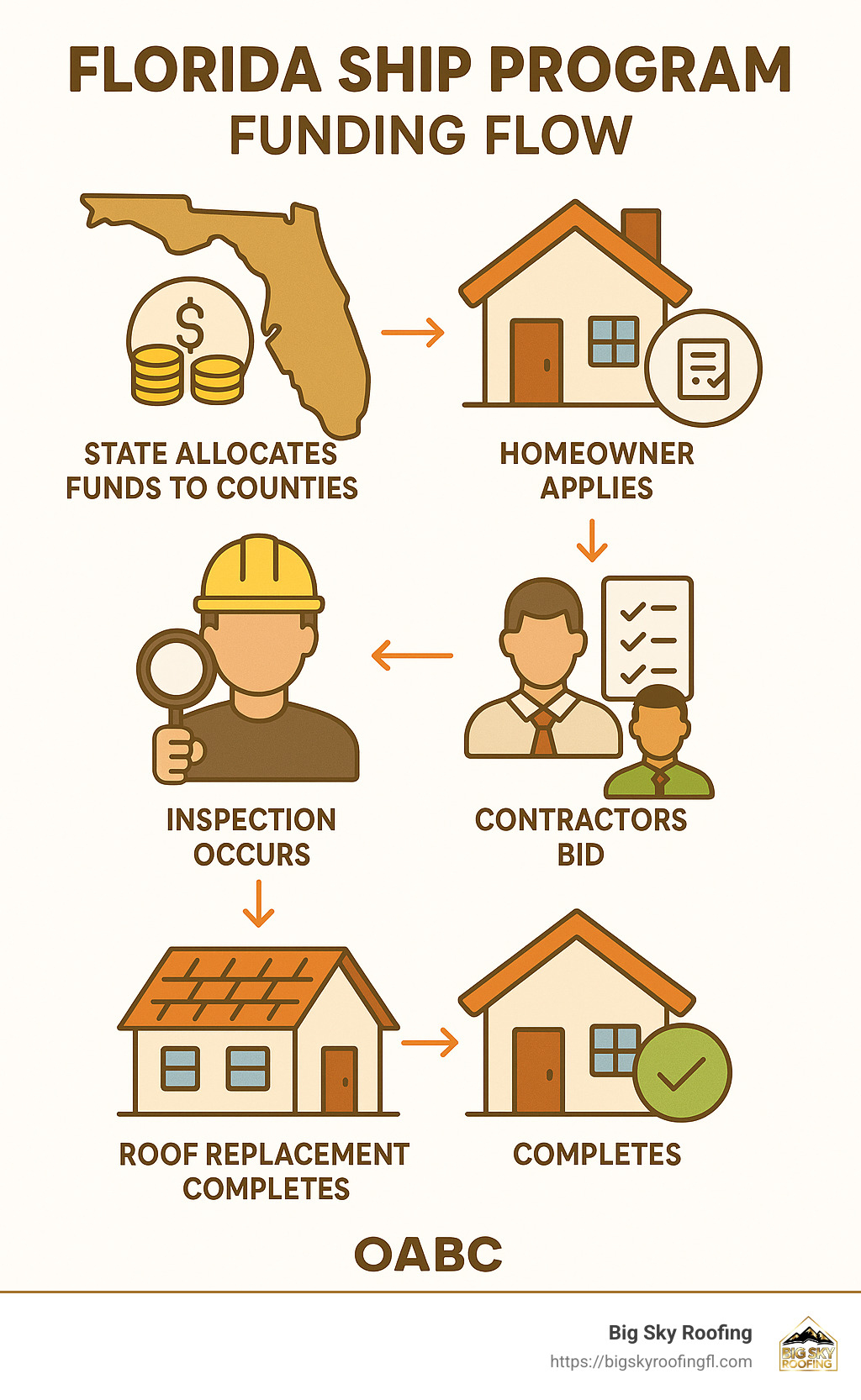
The program operates through county housing offices, with funding distributed on a first-come, first-qualified basis. Most counties structure the assistance as zero-interest, deferred payment loans that are forgiven after 5-10 years if you continue to live in the home.
If you’re struggling with a damaged roof and meet income qualifications, SHIP could provide the help you need—but funding availability varies by county and often runs out quickly when new application periods open.
Relevant articles related to does the Florida ship program cover roof replacement:
– average roof replace cost
– roof replacement Florida
What Is the Florida SHIP Program?
The State Housing Initiatives Partnership (SHIP) program is a lifeline for many Florida homeowners struggling to maintain safe housing. Created under the William E. Sadowski Affordable Housing Act of 1992, this uniquely Florida program provides crucial funding to help very low, low, and moderate-income families keep a roof over their heads—sometimes quite literally!
“When my roof started leaking after that big storm last year, I didn’t know where to turn,” shares Maria, a Lake County resident. “The SHIP program saved my home.”
The Florida Housing Finance Corporation administers this program, distributing funds to all 67 counties and 52 eligible municipalities throughout the state. What makes SHIP special is how it empowers local communities. Each county receives funding based on population size and then creates their own Local Housing Assistance Plan (LHAP) to address specific needs in their area.
Does the Florida SHIP program cover roof replacement? Absolutely! Roof replacement is one of the most common repairs funded through the program, though availability varies by county.
For homeowners in Sumter, Lake, Citrus, Hernando, Orange, and Marion counties, this means your local housing office determines exactly how SHIP funds are used in your community. This local control ensures the program addresses the unique housing challenges in Central Florida, including our vulnerability to hurricane damage.
“SHIP funds are administered year-round on a first-come, first-qualified basis,” explains one county’s documentation. This means timing your application can be crucial for securing assistance.
The program isn’t just about emergency repairs—it offers comprehensive housing support including:
– Homeownership assistance for first-time buyers
– Rehabilitation of existing homes
– Emergency repairs for critical systems
– New construction of affordable housing
– Rental assistance in some areas
SHIP Goals & Repair Categories
At its heart, SHIP aims to ensure every Floridian has access to safe, decent housing. The program focuses on preserving existing affordable housing, increasing the supply of affordable options, and prioritizing assistance to those most in need—particularly very low to moderate-income households.
When it comes to home repairs, SHIP programs typically focus on issues that affect health and safety. Code compliance is a major concern, especially in Florida where building codes have evolved significantly after major hurricanes. Bringing homes up to current standards not only protects residents but can lower insurance costs too.
Health and safety hazards take top priority under SHIP. A leaking roof doesn’t just damage your ceiling—it can create dangerous mold, compromise electrical systems, and eventually threaten the structural integrity of your entire home.
For elderly or disabled residents, SHIP often covers accessibility modifications that make homes more livable. This might include wheelchair ramps, grab bars, or widened doorways.
The program also addresses critical systems repairs, with roof, HVAC, plumbing, and electrical work being the most common. As one county’s SHIP documentation clearly states: “Eligible repairs include roof, heating and cooling, plumbing, electrical, and accessibility repairs.”
For many Central Florida homeowners, the most valuable aspect of SHIP is its coverage of roof replacement. Whether your roof is leaking after a storm, showing signs of age, or has reached the end of its lifespan, SHIP can provide the funds needed for repair or complete replacement—provided you meet the eligibility requirements.
For more information on how the program works at the state level, visit the Florida Housing Finance Corporation website, which oversees the program and provides resources for applicants.
Does the Florida SHIP Program Cover Roof Replacement?
Yes, the Florida SHIP program does cover roof replacement for eligible homeowners. I’ve seen how this program has become a lifeline for many Central Florida families facing costly roof repairs after our notorious summer storms and hurricanes.
When it comes to getting your roof replaced through SHIP, there are typically two paths forward:
- Emergency Repair Programs: These address those scary, immediate problems – like when your ceiling starts dripping during a thunderstorm or after a tree branch damages your roof. These programs often move faster but come with lower funding limits.
- Rehabilitation Programs: Think of these as the more comprehensive option. When your roof isn’t just leaking in one spot but needs a complete overhaul, rehabilitation programs provide higher funding amounts to tackle the entire project.
In Hernando County, for example, the SHIP Owner-Occupied Rehab program offers up to $90,000 as a forgivable loan to help income-qualified homeowners with major repairs including full roof replacement. Over in Winter Haven, their SHIP Rehabilitation Program provides up to $45,000 for eligible repairs, with the loan forgiven after five years if you meet all the program conditions.
“Under the Rehabilitation Assistance Program, repairs necessary to bring the home up to code—including fixing a leaking roof—are covered at no cost to the homeowner, up to $25,000,” states the Taylor County SHIP documentation.
It’s worth noting that since SHIP programs operate at the county level, the specific details vary across Sumter, Lake, Citrus, Hernando, Orange, and Marion counties. However, all these counties include roof replacement as an eligible repair when it addresses health, safety, or code compliance issues.
Does the Florida SHIP Program Cover Roof Replacement in Emergency Repair?
Yes, the Florida SHIP program covers roof replacement under its Emergency Repair track when your roof damage poses an immediate health or safety risk to your family.
Think about those situations that just can’t wait – a roof that’s actively leaking during our Florida rainy season, structural damage that makes parts of your home unsafe, or severe storm damage that leaves your home partially exposed to the elements. These are exactly the kinds of urgent problems the Emergency Repair track was designed to address.
As one SHIP program clearly states: “The Emergency Home Repair Program will provide home repair assistance for qualified families facing acute emergencies.”
Most counties cap emergency roof repairs at lower amounts than full rehabilitation – typically between $15,000 and $25,000. While this might not cover a complete roof overhaul on a large home, it’s usually enough to fix the most critical issues and keep your family safe and dry.
For instance, Taylor County’s SHIP documentation explains: “Under the Rehabilitation Assistance Program, repairs necessary to bring the home up to code—including fixing a leaking roof—are covered at no cost to the homeowner, up to $25,000.”
The best part? This assistance usually comes as a zero-interest, deferred payment loan that’s completely forgiven if you stay in your home for a specified period – typically five years. As one county puts it: “No repayment is required if the homeowner remains in the property as their principal residence for at least five years.”
For homeowners in Sumter, Lake, Citrus, Hernando, Orange, and Marion counties dealing with emergency roof issues, this program can be the difference between a quick repair and a prolonged, expensive nightmare.
Does the Florida SHIP Program Cover Roof Replacement Under Major Rehabilitation?
Yes, the Florida SHIP program covers complete roof replacement under its Major Rehabilitation track – and this is where the real financial help kicks in for eligible homeowners facing total roof failure.
Major rehabilitation through SHIP isn’t just about patching a few leaks – it’s about addressing comprehensive roofing needs as part of an overall home improvement project. The funding caps for these programs are significantly higher than emergency repairs, ranging from $45,000 to over $90,000 depending on which county you call home.
Let me break down what’s available in some of our Central Florida counties:
In Hernando County, the SHIP Owner-Occupied Rehab program provides up to $90,000 in a forgivable loan – more than enough for a complete roof replacement plus other necessary repairs. Winter Haven residents can access up to $45,000 through their SHIP Rehabilitation Program. And in Deltona, awards reach up to $60,000 per household.
“The program provides up to $100,000 in zero-interest, deferred-payment forgivable loans,” states the Hialeah SHIP Safe Home Program documentation. With funding at this level, you’re looking at a complete roof replacement with plenty left over for other critical home systems that might need attention.
Like the emergency repair assistance, rehabilitation funds typically come as zero-interest, deferred payment loans. However, since these are larger amounts, the occupancy requirements for loan forgiveness might be longer – anywhere from 5 to 10 years depending on your county’s specific rules.
For homeowners in Sumter, Lake, Citrus, Hernando, Orange, and Marion counties whose roofs have simply reached the end of their useful life, the rehabilitation track offers a comprehensive solution that can transform not just your roof but potentially your entire home.
Need guidance navigating the SHIP application process for your roof? Check out the Florida Roof Replacement Program or use our handy Roofing Cost Estimator to understand typical project costs in your area.
Eligibility Rules & Income Limits in Sumter, Lake, Citrus, Hernando, Orange, and Marion Counties
Wondering if you qualify for that much-needed roof replacement through the SHIP program? If you live in Central Florida, the good news is that help may be available—but there are some important boxes you’ll need to check first.
First and foremost, you must own and live in the home as your primary residence. This might seem obvious, but it’s worth emphasizing—SHIP funds are specifically designed to help people stay safely in their own homes, not to improve rental properties or vacation homes. As one county’s guidelines plainly state: “The unit must be owner-occupied as the primary residence.”
Your household income is the next big factor. To qualify for SHIP assistance, your family’s earnings typically need to fall at or below 80% of the Area Median Income (AMI) for your specific county. Many counties actually prioritize families with even lower incomes—those at or below 50% AMI (very low income) or 30% AMI (extremely low income). These thresholds give the most vulnerable families a better chance at receiving help.
There’s also a ceiling on property values in most counties. For example, Hernando County won’t approve homes valued above 90% of the area’s average purchase price. This ensures the program helps modest homeowners rather than those with higher-value properties.
As for property types, SHIP generally covers single-family homes, townhouses, and condominiums. One important note for many rural Central Florida residents: most counties exclude mobile and manufactured homes from SHIP assistance, which can be a significant limitation in areas where these housing types are common.
Your home needs to have legitimate issues that need fixing, but can’t be so far gone that it’s beyond saving. And don’t forget the basics—your property taxes must be current and if you have a mortgage, those payments need to be up-to-date too.
Here’s a simplified look at the 2024 income limits for single-person households across our Central Florida counties:
These limits increase with household size, and they’re updated annually, so always check with your county for the most current figures.
Many counties also give certain groups a leg up in the application process. If you’re elderly (typically 62+), have a disability, are a veteran, have children in your household, or are a former first responder, you might receive priority consideration. As one county program notes: “Expedited approval and prioritization are given to low-income elderly, veterans, disabled individuals, and former first responders.”

Documentation Checklist
When you’re ready to apply for SHIP roof replacement assistance, having your paperwork in order can make all the difference. Counties get flooded with applications when funding becomes available, and incomplete applications often get set aside.
To prove ownership and residency, you’ll need your deed or title to the property, proof of homestead exemption, a driver’s license showing your property address, and recent utility bills in your name.
Income verification is particularly thorough. Be prepared to share your federal tax returns (usually for the past 2-3 years), recent pay stubs for everyone in the household who works, Social Security or pension statements if applicable, and bank statements for all your accounts. If you receive other income like alimony or child support, you’ll need documentation for those too.
For your property, counties want to see that your property taxes are paid (bring a current receipt), your mortgage is in good standing (if you have one), and you have active homeowner’s insurance. If you’re in a flood zone, your flood insurance documentation is also required.
Don’t forget the basics for everyone in your household: Social Security cards, birth certificates for children, marriage certificates or divorce decrees if relevant, and any disability or veteran documentation that might help prioritize your application.
As one county housing office advises: “Download, complete, and return the Home Repair Application Packet to the Housing Program Division. Ensure property taxes are current and the unit meets minimum housing code requirements.”
Taking the time to gather all these documents before you apply can significantly speed up your approval process—which is crucial when you’re dealing with a leaking roof and limited program funds. Think of it as preparing for a job interview—you want to make the best impression possible and demonstrate that you’ve done your homework.
How to Apply & Secure Funding for Your Roof
Ready to get a new roof through the SHIP program? The process might seem daunting, but I’ll walk you through it step-by-step. While each county has its own nuances, the basic application journey follows a similar path whether you’re in Sumter, Lake, Citrus, Hernando, Orange, or Marion County.
First, take a moment to check your eligibility. Review your county’s specific income limits and property requirements before investing time in the application. Once you’re confident you qualify, reach out directly to your county’s housing office:
- In Sumter County, contact the Housing Services Division
- In Lake County, you’ll want the Housing Services Division
- For Citrus County residents, it’s Housing Services
- Hernando County applicants should call Housing and Supportive Services
- Orange County homeowners need to reach the Housing and Community Development Division
- And in Marion County, the Community Services Department handles SHIP
Most counties maintain waitlists because demand often exceeds available funding. As one homeowner finded: “I called in January and was told to complete the pre-application form. Six months later, they contacted me when funding became available.” Be prepared for this waiting period—patience is definitely part of the process.
When your county opens applications, you’ll need to act quickly. Does the Florida SHIP program cover roof replacement applications stay open long? Not usually. Most counties operate on a first-come, first-qualified basis, and funding can be exhausted within days or weeks of opening.
“I submitted my application the very morning they opened,” shared one Lake County resident. “By the following week, they had already closed applications because they reached their funding limit.”
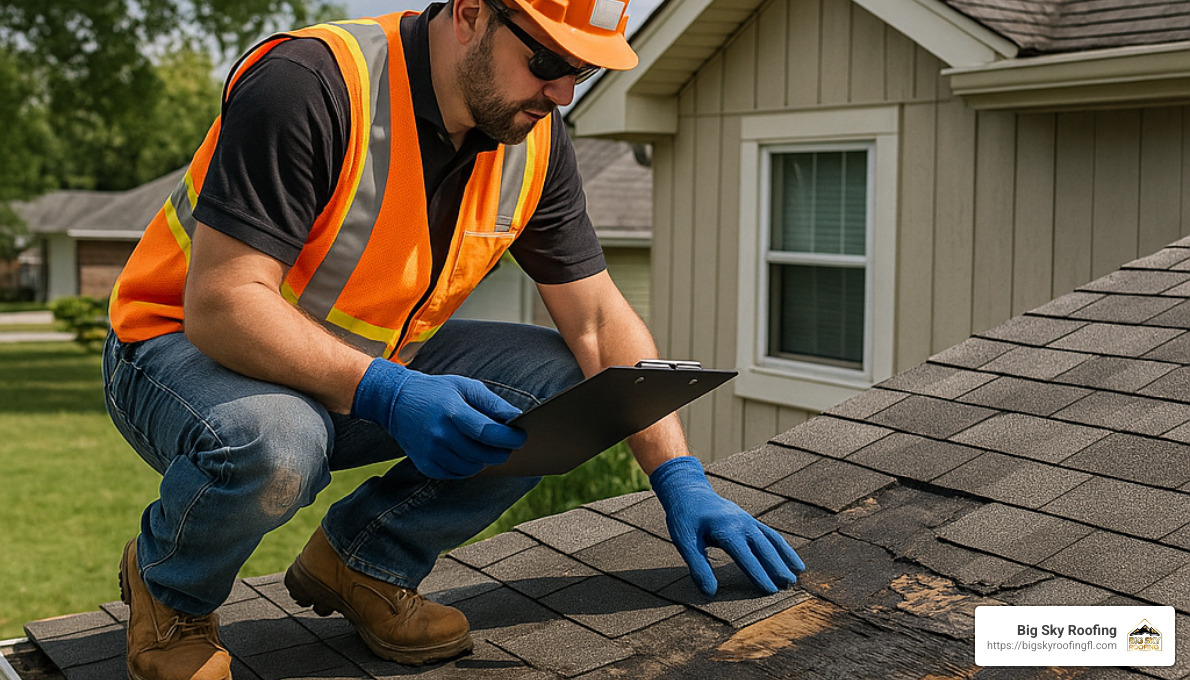
Once your application passes initial review, the county will schedule a home inspection. A licensed inspector will verify your roof’s condition and identify any other necessary repairs. This inspection is crucial—it documents the legitimacy of your need and helps determine funding amounts.
After approval, contractor selection happens one of two ways: either the county assigns someone from their approved list, or you’ll obtain bids from multiple approved contractors. Some good news: after July 1, 2024, several counties now allow homeowners to “choose any certified Florida State contractor” rather than selecting only from a pre-approved list.
Before work begins, you’ll sign loan documents establishing the terms of assistance. This paperwork typically includes a zero-interest, deferred payment loan agreement, a mortgage or lien on your property, and terms for loan forgiveness (usually 5-10 years of continued occupancy).
The construction phase brings relief as your new roof takes shape. County inspectors will check in periodically to ensure quality and code compliance. Once complete, a final inspection verifies all work meets requirements, and the contractor gets paid directly from your SHIP funds.
Timeline & What to Expect
When planning for SHIP assistance, understanding the timeline helps set realistic expectations. The complete process rarely happens overnight—here’s what most homeowners experience:
The pre-application phase can be the longest wait, ranging from 1 to 12+ months. This extended period occurs because many counties only open applications when new funding becomes available. During this time, check back regularly or join a notification list to stay informed.
Once your application enters active processing, things move more steadily. Application review typically takes 2-4 weeks for eligibility verification and income certification. The home inspection follows, usually scheduled within 2-4 weeks of application approval.
An environmental review (required for federally-funded housing programs) adds another 1-3 weeks, though this is typically just a formality for roof replacements. Contractor selection follows, taking 2-4 weeks for obtaining bids, county review, and contract execution.
The loan closing phase moves relatively quickly, usually 1-2 weeks to sign documents and record the necessary liens. Then comes the moment you’ve been waiting for—construction! The actual roof replacement typically takes 2-6 weeks from scheduling to completion, including material ordering and progress inspections.
Final inspection and project closeout wrap up the process in about 1-2 weeks. In total, from initial application to completed roof, expect 3-9 months (not including any waitlist period). As one SHIP administrator noted, “The application and reimbursement process takes approximately 90 days” once active processing begins.
Staying Compliant to Achieve Loan Forgiveness
The best part about SHIP assistance? If you follow the rules, you typically don’t have to pay back a penny. SHIP structures roof replacement help as zero-interest, deferred payment loans that can be fully forgiven after a set period—usually 5-10 years.
Maintaining primary residence status is the most important requirement. You must continue living in the home—not renting it out or using it as a vacation property. As one county’s terms clearly state: “Full repayment is due if transferred within five years; years six through nine require pro-rated repayment (80% in year six down to 20% in year nine).”
Keeping property taxes current is equally important. Pay on time each year and respond promptly to any tax notices. Some homeowners find setting up a tax escrow helpful if annual tax bills are challenging to budget for.
Maintaining required insurance protects both you and the county’s investment. Keep your homeowner’s insurance active and ensure coverage meets minimum program requirements. Be prepared to provide proof if requested.
Avoiding additional liens without approval helps maintain clear title. Don’t take out home equity loans without county approval, and avoid tax liens or other encumbrances. If you’re considering refinancing, consult with the SHIP program first.
Complying with resale restrictions is crucial if you need to sell. Understand that selling typically triggers repayment, though some counties offer pro-rated forgiveness schedules. One county specifies: “Full repayment is due if transferred within five years; years six through nine require pro-rated repayment (80% in year six down to 20% in year nine, 0% in year ten).”
At Big Sky Roofing, we understand the SHIP application process in Central Florida counties and can help guide you through the contractor selection and bidding phase. Our experience with SHIP-funded projects means we understand program requirements and can provide accurate, compliant bids that meet all county specifications.
Florida Roof Replacement Program
Comparing SHIP, My Safe Florida Home & Other Help
If you’re a homeowner in Central Florida facing roof problems, you’ve probably finded there are several assistance programs available. Let’s break down how SHIP compares to other options and help you understand which might work best for your situation.
The SHIP program stands out for its comprehensive approach to home repairs. Unlike some other programs, SHIP can fund complete roof replacements through either emergency repair or rehabilitation tracks. With funding amounts ranging from $25,000 to $90,000 depending on your county, SHIP typically offers the most substantial financial assistance available—though it does come with income restrictions and occupancy requirements.
“SHIP provides the most comprehensive assistance for low-income homeowners needing major roof work,” explains one housing counselor in Hernando County. “The forgivable loan structure means you won’t have to pay it back if you stay in your home long enough.”
By comparison, the My Safe Florida Home Program takes a different approach. This statewide initiative focuses specifically on hurricane mitigation rather than general repairs. While it’s open to more homeowners regardless of income, it has important limitations when it comes to roofing.
“Roof replacement is only eligible if it includes a Secondary Water-Resistant Barrier and is capped at $10,000,” states the My Safe Florida Home program documentation. This means you’ll only qualify if you’re specifically adding hurricane-resistant features, and the funding cap is substantially lower than SHIP offers.
The My Safe Florida Home program also uses a matching grant structure—for every $1 you contribute, the state provides $2, up to their maximum. There’s no forgiveness period to worry about since it’s a grant rather than a loan, but you’ll need to have some money available upfront to participate.
For homeowners affected by specific disasters, FEMA Disaster Assistance might be an option, but it typically covers only emergency repairs rather than full roof replacements. Similarly, homeowner’s insurance claims can help, but only if your roof damage resulted from a covered peril like wind or hail—and you’ll still need to pay your deductible.
Many Central Florida residents also turn to non-profit organizations like Habitat for Humanity and Rebuilding Together, which offer critical home repair services including roofing assistance. These programs often target very low-income households, elderly residents, disabled individuals, and veterans.
“Habitat for Humanity and Rebuilding Together offer critical home repair services including roofing,” notes one housing resource guide. However, these programs often have limited funding and may only address the most critical repair needs rather than complete replacements.
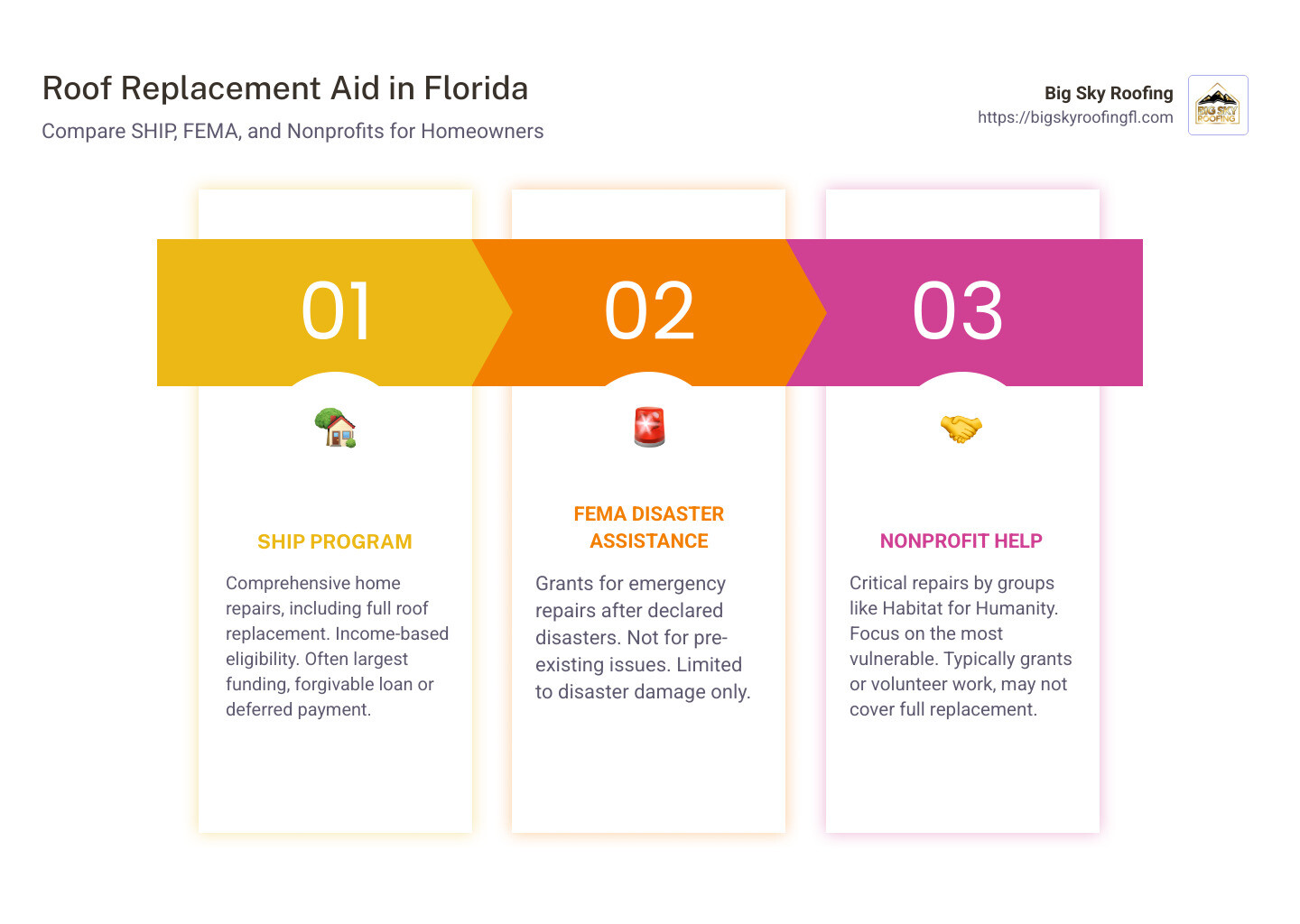
For homeowners in Sumter, Lake, Citrus, Hernando, Orange, and Marion counties who meet income guidelines, SHIP typically represents the most substantial and comprehensive option for roof replacement assistance.
When SHIP Funds Are Exhausted
The truth about SHIP funding is that it’s limited and incredibly popular. Counties often exhaust their allocations quickly when new application periods open. If you find yourself needing a roof replacement when SHIP funds are unavailable, don’t lose hope—there are several strategies to consider.
First, get on the waitlist. Most counties maintain notification lists for future funding cycles. As one county housing department advises: “Fill out the SHIP Home Repair Pre-Application Request Form to be notified when funding becomes available.” This puts you in line for consideration when new funds are allocated.
While you wait, consider applying for My Safe Florida Home grants if your roof project includes hurricane hardening features. The application process is centralized through the state portal at Program FAQs – My Safe Florida Home, making it potentially faster than county-based programs.
Many Central Florida counties also operate separate Community Development Block Grant (CDBG) programs that can fund roof repairs. These federally-funded initiatives may have different eligibility requirements than SHIP, so it’s worth checking with your county’s community development department even if you don’t qualify for SHIP.
Don’t overlook local non-profit organizations. Groups like Habitat for Humanity, Rebuilding Together, faith-based ministries, and Community Action Agencies often have their own home repair programs. While these typically offer smaller assistance amounts, they may be able to address the most critical roof issues until more comprehensive funding becomes available.
For veterans, several veteran-specific programs offer housing assistance, including the VA grants for disabled veterans and emergency assistance through organizations like the VFW and American Legion.
The federal Weatherization Assistance Program (WAP) is another option that sometimes flies under the radar. “The Weatherization Assistance Program can cover minor roof repairs if needed for energy performance,” notes one housing resource guide. While it won’t fund a complete replacement, it might address leaks or damaged sections that affect your home’s energy efficiency.
In the meantime, protecting your home from further damage is crucial. At Big Sky Roofing, we understand the challenges Central Florida homeowners face while waiting for assistance programs. We can provide temporary repairs and maintenance services to extend your roof’s lifespan until more comprehensive funding becomes available through SHIP or other programs.
Frequently Asked Questions about SHIP Roof Replacement
How much funding can I receive for a new roof?
When it comes to getting a new roof through the SHIP program, the amount of money you can receive varies quite a bit depending on where you live in Central Florida.
For emergency situations—like when your roof is actively leaking and causing damage to your home—counties typically offer between $15,000 and $25,000. This is usually enough to address the immediate problem and make your home safe again.
For more comprehensive work, the rehabilitation programs are much more generous. In Hernando County, for instance, the SHIP Owner-Occupied Rehab program provides up to $90,000 in a forgivable loan. Over in Winter Haven, their SHIP Rehabilitation Program offers up to $45,000 for eligible repairs. These larger amounts can cover not just your roof but other critical home repairs too.
What’s nice about these programs is that they typically cover everything you need for a complete roof replacement:
- Tearing off all those old, damaged shingles or tiles
- Replacing any rotted wood decking underneath
- Installing new underlayment and water barriers (crucial in our Florida rainstorms!)
- All-new roofing materials—whether you need shingles, tiles, or metal
- The essential components like flashing, vents, and ridge caps
- Even the permit fees and required inspections
Just remember, these programs are designed to address necessary repairs, not luxury upgrades. While you might dream of imported Spanish clay tiles, the program will cover standard materials that meet building codes and provide proper protection for your home.
Are mobile homes or rental properties eligible?
Unfortunately, if you live in a mobile or manufactured home, you’ll likely find yourself unable to qualify for SHIP roof replacement assistance in most Central Florida counties. The guidelines are pretty clear on this point. As one county bluntly puts it: “Mobile or manufactured homes, properties in special flood hazard or repetitive loss areas, and those with sinkhole or ground-settlement history” simply aren’t eligible.
There are several practical reasons behind this exclusion. Mobile homes typically decrease in value over time, unlike traditional homes. They also have different roofing systems that often require specialized approaches. Many mobile homes sit in rental parks rather than on owner-occupied land, which creates additional complications for the program.
As for rental properties—whether you own a single-family rental home or a multi-unit building—these generally don’t qualify for the SHIP roof replacement programs either. The program is specifically designed to help people who own and live in their homes as their primary residence. As one county’s criteria states: “The unit must be owner-occupied as the primary residence.”
If you’re a landlord in Sumter, Lake, Citrus, Hernando, Orange, or Marion County looking to fix a rental property’s roof, you’ll need to explore other options. Some counties do have separate SHIP-funded programs for affordable rental housing, but these target larger affordable housing providers rather than individual landlords with a few properties.
Can SHIP pay my insurance deductible after a storm?
After a big storm hits your Central Florida home, you might wonder if the SHIP program can help cover your insurance deductible. The straightforward answer is SHIP funds generally cannot be used to directly pay insurance deductibles. The program is designed to fill gaps in housing needs, not supplement existing insurance coverage.
That said, there are some important nuances worth understanding:
If your roof damage isn’t fully covered by insurance—or isn’t covered at all—SHIP may be able to step in. For example, if your insurance only covers part of the necessary repairs due to depreciation calculations or policy limitations, SHIP might help with the remaining costs.
SHIP can sometimes cover necessary repairs that relate to but aren’t included in insurance settlements. Let’s say your insurance covers basic roof replacement, but during the work, contractors find you need additional code-required upgrades. SHIP might help with those additional expenses.
While SHIP typically won’t cover your deductible, other specialized programs sometimes do. For example, after Hurricane Idalia, some counties offered disaster recovery funding specifically designed to reimburse insurance deductibles and address unmet repair needs.
The timing can be tricky, though. SHIP has specific application windows and processing times that may not align with your immediate post-storm needs. Insurance claims typically need to be settled much more quickly.
If your home in Sumter, Lake, Citrus, Hernando, Orange, or Marion County has been damaged by a storm, here’s what we at Big Sky Roofing recommend:
File your insurance claim right away and document everything thoroughly with photos and notes. Then reach out to your county’s SHIP office to ask about any disaster-specific assistance that might be available. Sometimes counties receive additional funding after major storms.
At Big Sky Roofing, we’ve helped many homeowners steer both insurance claims and assistance programs. We’re happy to help identify all possible resources to get your roof replaced after storm damage, even if you’re facing a high deductible.
Conclusion
The Florida SHIP program does cover roof replacement for eligible homeowners in Sumter, Lake, Citrus, Hernando, Orange, and Marion counties. If you’re struggling with a leaking or damaged roof but can’t afford to replace it, SHIP could be your pathway to a safe, secure home without breaking the bank.
Throughout Central Florida, we’ve seen how SHIP has helped countless homeowners replace aging or storm-damaged roofs. Whether you need emergency repairs for active leaks or a complete replacement as part of broader home improvements, this program provides meaningful assistance when you need it most.
What makes SHIP particularly valuable is its comprehensive approach. Unlike some assistance programs that only cover partial repairs, SHIP funding—ranging from $25,000 to $90,000 depending on your county—typically provides enough to handle a complete roof replacement. From tearing off old materials to installing new shingles, underlayment, and flashing, the program covers all essential components of a quality roofing job.
The beauty of SHIP assistance is that it comes as a zero-interest, deferred payment loan that’s forgiven after you live in your home for 5-10 years. This effectively transforms the loan into a grant if you simply continue residing in your house—making roof replacement truly affordable for families on tight budgets.
Remember though, funding is limited and distributed on a first-come, first-qualified basis. Many counties maintain waitlists between funding cycles, so it’s wise to contact your county housing office sooner rather than later if you’re experiencing roof problems.
At Big Sky Roofing, we’ve guided many homeowners through the SHIP application process across Sumter, Lake, Citrus, Hernando, Orange, and Marion counties. Our team understands local program requirements and can help at every stage:
We provide thorough roof inspections that document your replacement needs with the detail county programs require. Our estimates are accurate, competitive, and formatted to meet SHIP specifications. When your project is approved, we install high-quality, code-compliant roofing systems that satisfy all program requirements and pass county inspections.
With over 25 years of experience in Central Florida roofing, we’ve developed expertise in working with housing assistance programs like SHIP. We understand the documentation requirements, building