How to Repair Storm Damage Roofing in 5 Simple Steps
•
Written By
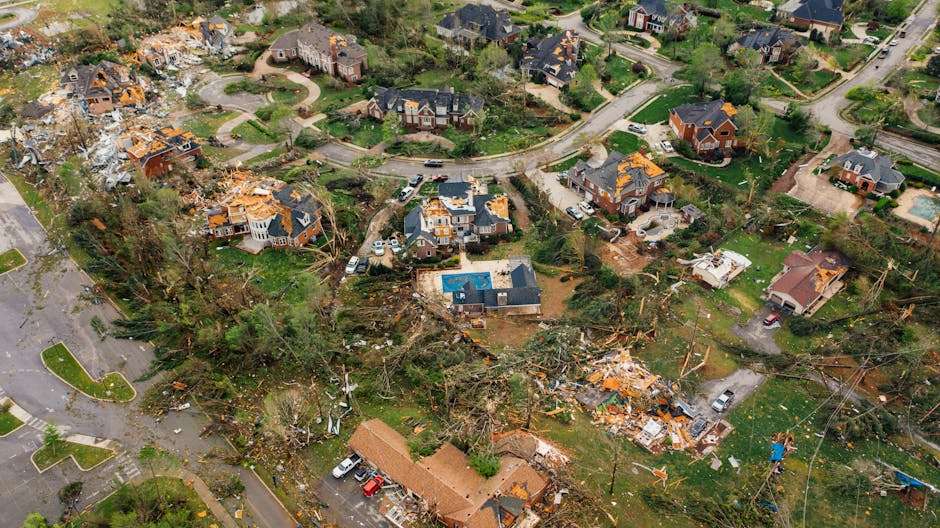
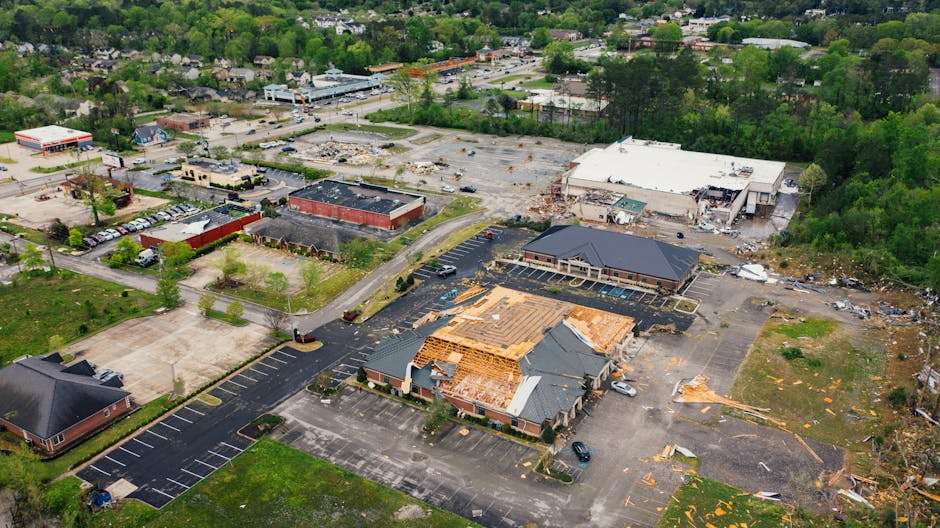
When it comes to storm damage roofing, knowing where to start with repairs can be overwhelming, especially for Florida homeowners in areas like Sumter County, Lake County, Citrus County, Hernando County, Orange County, and Marion County. With the state’s frequent storms, understanding how storms affect your roof is crucial to protecting your home and keeping repair costs down.
Here’s what you need to know right away:
- Inspect your roof immediately after a storm for visible damage such as missing shingles, dents, or leaks.
- Consider temporary fixes, like covering holes with a tarp, until professional help arrives.
- Document damage extensively with photos and notes for your insurance claim.
- Check your insurance policy to understand your coverage for storm-related roof repairs.
- Contact a reputable roofing contractor to evaluate the damage and provide an estimate for repairs or replacements.
Storm damage isn’t just an inconvenience; it can severely impact the integrity of your home if left unchecked. Insurance can help mitigate out-of-pocket costs, but only if you’re equipped with the right information and documentation.
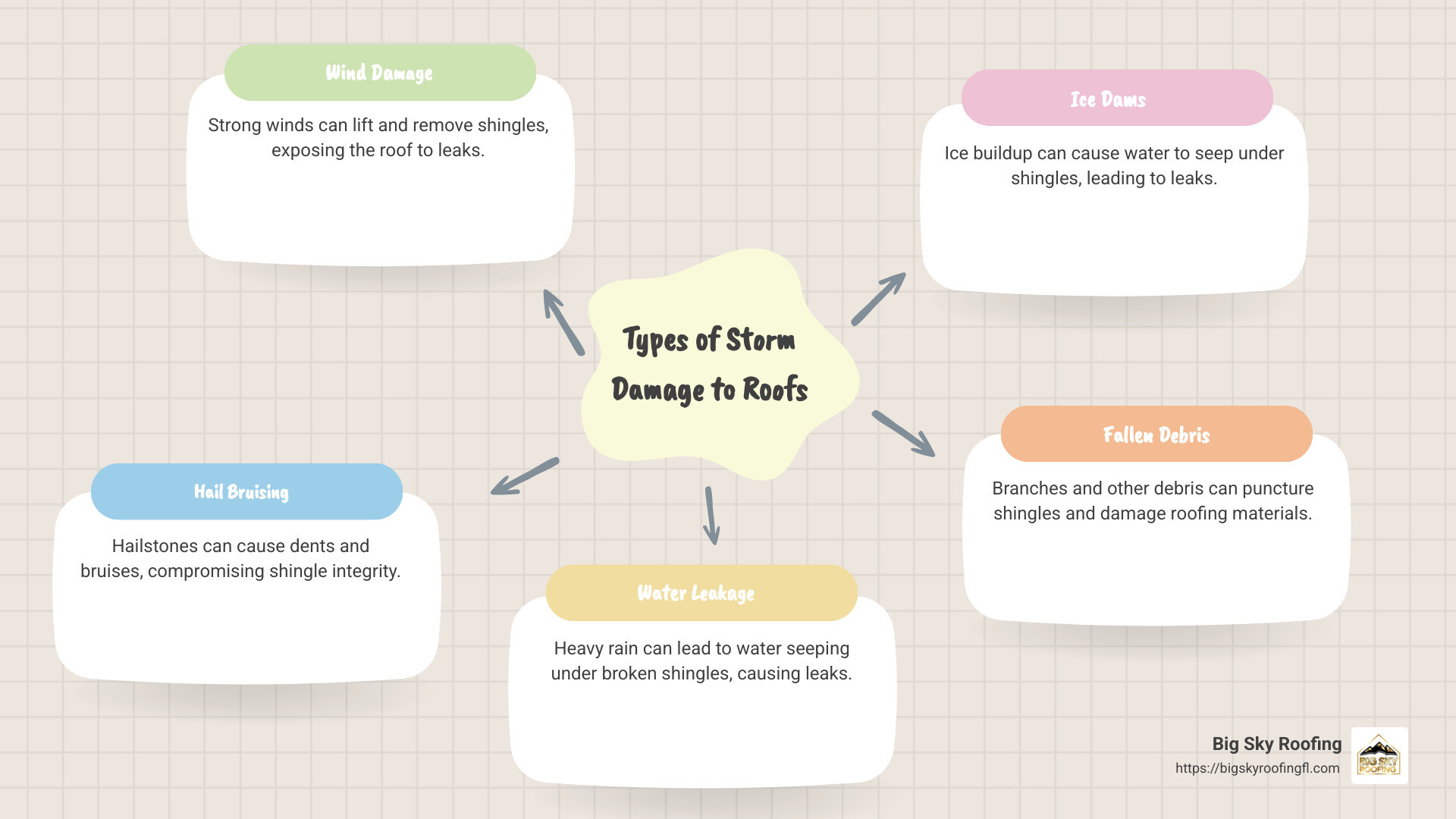

Assess the Damage
When it comes to storm damage roofing, the first step is a thorough assessment of your roof. This ensures that all damage is identified and addressed promptly. Here’s how to get started:
Roof Inspection
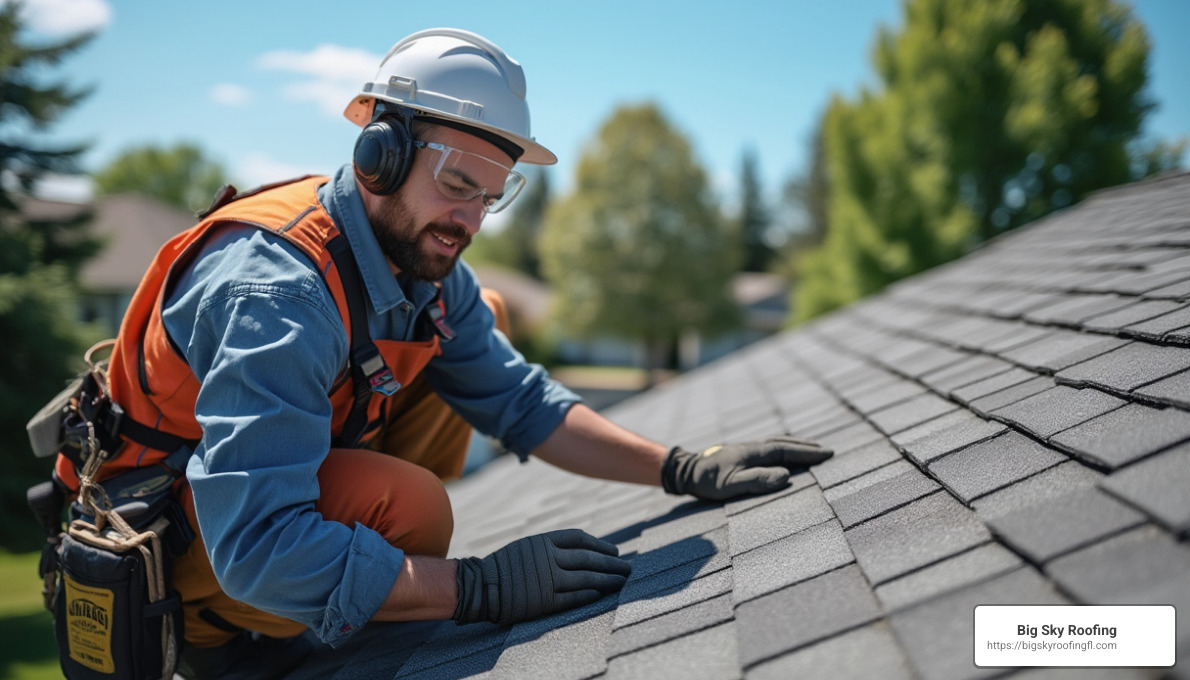
Begin with a visual inspection of your roof from the ground. Look for obvious signs of damage such as:
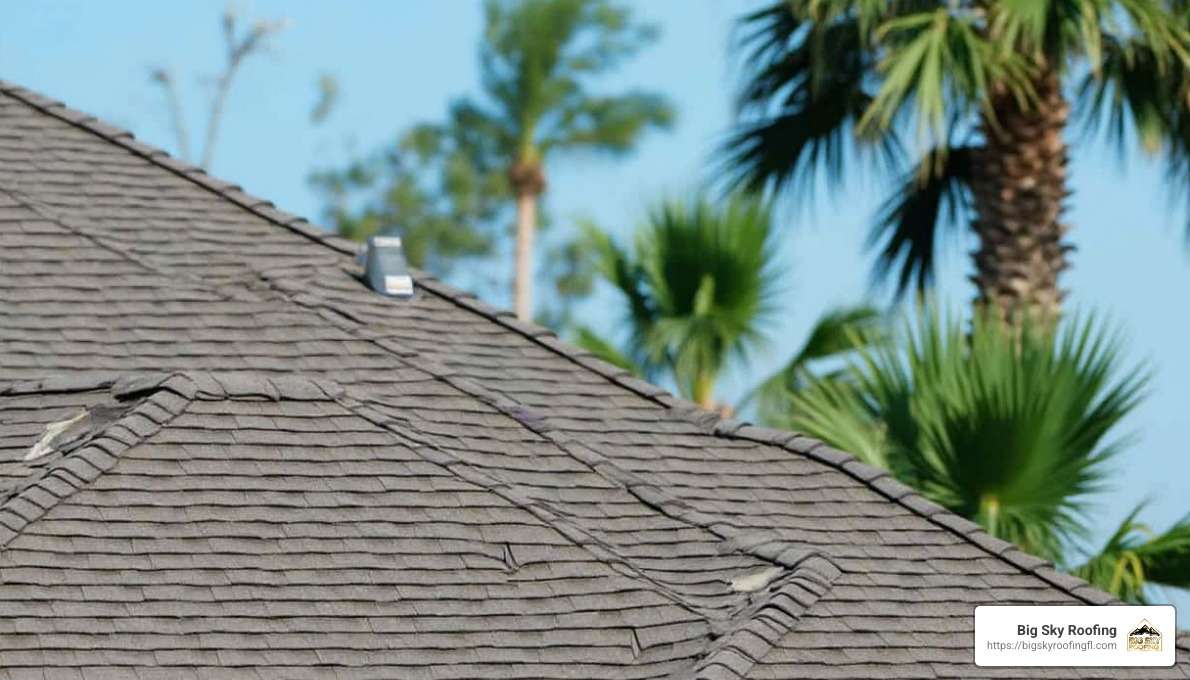
- Missing or broken shingles: These can lead to leaks and further structural issues.
- Dents or punctures: Often caused by hail, these can compromise the roof’s protective layer.
- Sagging areas: Indicate potential structural damage that needs immediate attention.
For a more detailed inspection, consider hiring a professional. They can safely access the roof and spot issues that might not be visible from the ground.
Debris Removal
After a storm, your roof may be covered with debris like branches, leaves, and other materials. It’s essential to remove this debris to prevent further damage and to get a clear view of the roof’s condition. Be cautious while doing this, as the roof might be slippery or unstable.
If you can’t safely remove the debris yourself, it’s best to hire a professional. They have the tools and experience to do the job safely and effectively.
Professional Evaluation
Once the roof is clear of debris, a professional evaluation is crucial. A roofing expert will assess the extent of the damage and provide a detailed report. This report is invaluable for:
- Insurance claims: It provides documented evidence of the damage.
- Repair estimates: Helps you understand the scope and cost of necessary repairs or replacements.
A professional evaluation can also uncover hidden issues that might not be immediately apparent, ensuring that all potential problems are addressed.
By following these steps, you’ll be well-prepared to handle any storm damage to your roof. This proactive approach not only protects your home but also helps streamline the insurance claim process, potentially saving you time and money in the long run.
Understand Your Insurance Policy
Understanding your insurance policy is crucial when dealing with storm damage roofing. Knowing your coverage can make a big difference in how you handle repairs and replacements. Let’s break down the essentials.
Coverage Types
Most homeowners’ insurance policies cover storm damage from events like wind and hail. However, it’s important to check if your specific policy includes any exclusions or limitations. Wind damage and hail coverage are common, but always confirm with your insurer to avoid surprises.
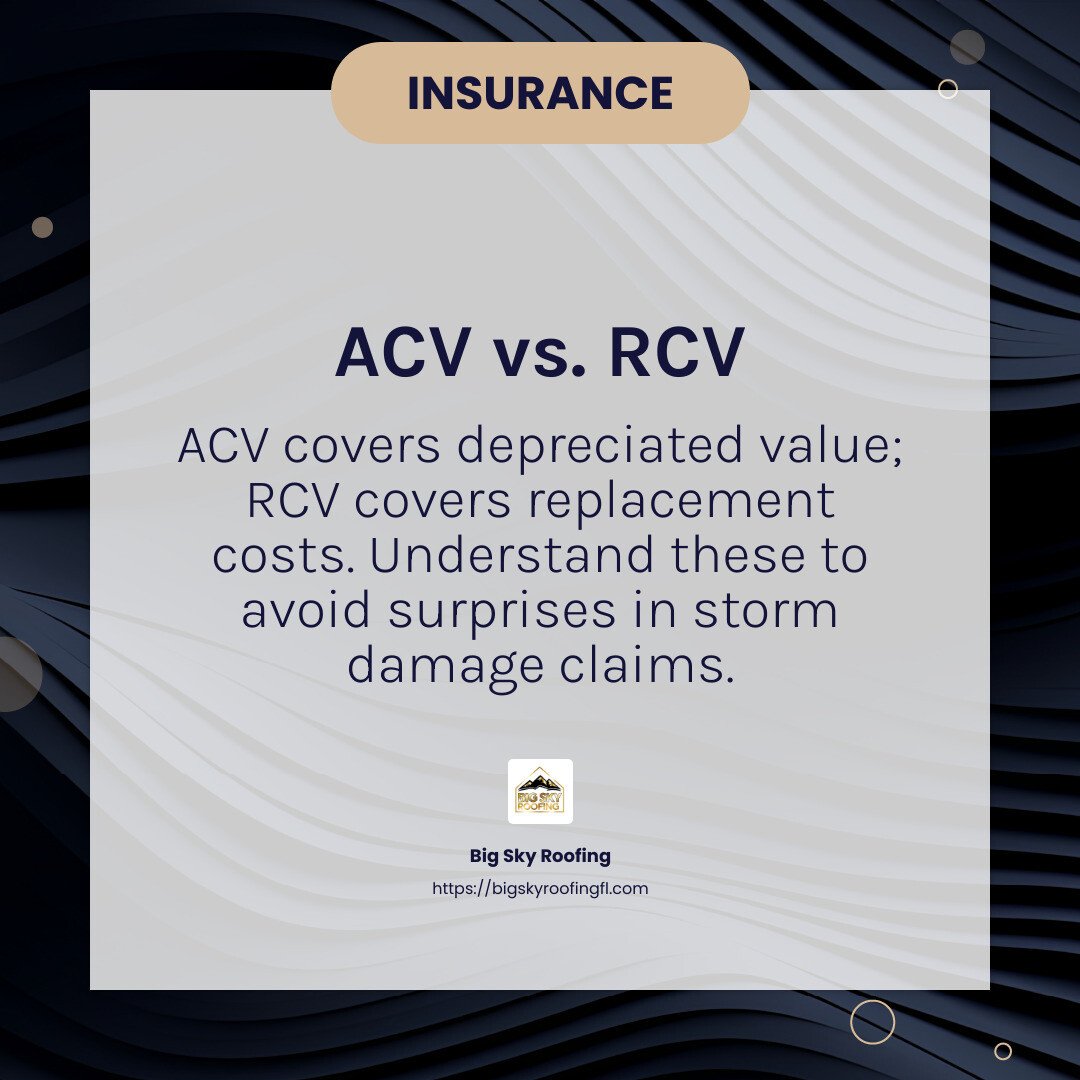
ACV vs. RCV
When it comes to insurance payouts, policies typically fall into two categories: Actual Cash Value (ACV) and Replacement Cost Value (RCV).
- ACV: This policy type pays out the depreciated value of your roof. If your roof is older, the payout might be lower because it factors in wear and tear.
- RCV: This offers a payout based on the cost to replace your roof with a new one. While this sounds ideal, it’s important to note that full replacement costs are rarely covered without some negotiation.
Deductible Considerations
Before filing a claim, consider your deductible. This is the amount you must pay out of pocket before your insurance kicks in. Let’s look at an example:
For a roof replacement costing $15,000 with a $1,000 deductible:
- ACV Policy: If the depreciated value is $5,000, your insurance payout would be $4,000 ($5,000 minus the deductible). You’d pay $11,000 out of pocket.
- RCV Policy: You’d receive $14,000 from insurance ($15,000 minus the deductible), leaving you to pay just $1,000.
Higher deductibles can lower your premium but increase your out-of-pocket costs when filing a claim.
Understanding these aspects of your insurance policy will help you make informed decisions about your storm damage roofing repairs. This knowledge can also streamline your interactions with your insurance company, ensuring you get the coverage you’re entitled to.
Next, we’ll discuss how to effectively communicate with your insurance company during the claims process.
Contact Your Insurance Company
Once you understand your insurance policy, the next step in handling storm damage roofing is to contact your insurance company. This is key to ensuring your claim is processed smoothly and efficiently.
Claim Process
Start by notifying your insurance company about the storm damage as soon as possible. They will guide you through their specific claims process. Be prepared to provide details about the damage, including when and how it occurred. It’s helpful to have a copy of your policy on hand for reference.
Adjuster Inspection
After you file a claim, your insurance company will likely send an adjuster to inspect your roof. The adjuster will assess the extent of the damage and determine the payout amount based on your policy. Having a trusted roofing contractor present during this inspection can be beneficial. They can provide an independent assessment and ensure that nothing is overlooked.
Documentation
Proper documentation is crucial in the claims process. Take clear photos of the damage from multiple angles, if safe to do so. Document any temporary repairs you make to prevent further damage, as these are often reimbursable. Keep all receipts and records related to the damage and repairs. This documentation will support your claim and help avoid disputes with your insurance company.
By following these steps, you can steer the insurance process with confidence, ensuring you receive the appropriate compensation for your storm damage roofing. Next, we’ll cover how to choose the right roofing contractor for your repair or replacement needs.
Hire a Trusted Roofing Contractor
Choosing the right roofing contractor is crucial when dealing with storm damage roofing. A skilled contractor will guide you through the repair process, ensuring quality work and peace of mind.
Contractor Selection
Begin by researching local contractors in your area, especially those with experience in storm damage repairs. Focus on companies like Big Sky Roofing, which serves Florida counties such as Sumter, Lake, Citrus, Hernando, Orange, and Marion. Look for contractors with a strong reputation, verified licenses, and insurance. Check online reviews and ask for recommendations from friends or neighbors who have had similar work done.
Key things to consider:
- License and Insurance: Make sure the contractor is licensed and insured to protect yourself from liabilities.
- Experience: Choose a contractor with a proven track record in handling storm damage.
- References: Request references and contact past clients to gauge satisfaction.
Inspection Report
Once you’ve selected a contractor, they will conduct a thorough inspection of your roof. This inspection is critical to identify all areas of damage, even those not immediately visible. The contractor should provide a detailed inspection report, outlining the extent of the damage and recommended solutions.
What to expect in the inspection report:
- Damage Assessment: A comprehensive evaluation of all damage, including hidden issues.
- Photographic Evidence: Photos of the damage to support your insurance claim.
- Repair Recommendations: Suggested methods to repair or replace the damaged sections.
Repair Estimate
After the inspection, your contractor will provide a repair estimate. This estimate should break down the costs of materials, labor, and any other necessary expenses. It’s important to compare estimates from multiple contractors to ensure you’re getting a fair price.
Tips for reviewing estimates:
- Detailed Breakdown: Ensure the estimate includes all aspects of the repair, from materials to labor.
- Warranty Information: Check if the contractor offers warranties on their work and the materials used.
- Clarify Any Questions: Don’t hesitate to ask questions if any part of the estimate is unclear.
Hiring a trusted roofing contractor is a vital step in the storm damage repair process. With the right professional by your side, you can ensure your roof is repaired to the highest standards. Next, we’ll explore the options for repairing or replacing your roof.
Repair or Replace the Roof
Once you’ve assessed the damage and selected a trusted contractor, it’s time to decide whether to repair or replace your storm-damaged roofing. This decision depends on the extent of the damage, the age of your roof, and your budget.
Roof Replacement
If the damage is extensive or your roof is nearing the end of its lifespan, replacement might be the best option. Asphalt shingles typically last 20 to 30 years, while metal roofing can last 40 to 70 years. If your roof is older, replacing it can be more cost-effective in the long run.
Benefits of Roof Replacement:
- Improved Protection: A new roof provides better protection against future storms.
- Increased Home Value: A new roof can boost your home’s curb appeal and resale value.
- Energy Efficiency: Modern roofing materials can improve insulation and reduce energy costs.
Repair Options
For less severe damage, repairing the roof might be sufficient. Repairs can address issues like missing shingles, leaks, or minor structural damage. Your contractor will recommend the best repair options based on their inspection report.
Common Repair Solutions:
- Shingle Replacement: Replace missing or damaged shingles to prevent leaks.
- Leak Sealing: Apply sealants to fix small leaks and prevent water damage.
- Flashing Repair: Repair or replace damaged flashing to ensure proper water drainage.
Material Selection
Whether repairing or replacing, choosing the right materials is crucial. Consider durability, cost, and aesthetics when selecting roofing materials.
Popular Roofing Materials:
- Asphalt Shingles: Affordable and easy to install, suitable for most homes.
- Metal Roofing: Long-lasting and resistant to wind and hail damage.
- Tile Roofing: Offers durability and a distinctive look, ideal for warmer climates.
Consult with your contractor to select materials that suit your home’s style and your budget. They can provide samples and discuss the pros and cons of each option.
Deciding to repair or replace your roof is a significant decision. With guidance from a trusted contractor, you can choose the best path forward to ensure your home is protected from future storms. Next, we’ll address frequently asked questions about storm damage roofing.
Frequently Asked Questions about Storm Damage Roofing
What to do if your roof is damaged in a storm?
If your roof suffers damage from a storm, act quickly to prevent further issues. Here’s what you should do:
- Document the Damage: Use a camera or smartphone to take photos of the damage. Focus on visible harm like missing shingles or dents caused by hail.
- Contact a Roofing Contractor: Reach out to a trusted roofing contractor in your area. A professional evaluation is essential to assess the extent of the damage and recommend appropriate repairs or replacement.
- Get Repair Estimates: Request a detailed repair estimate from your contractor. This will help you understand potential costs and decide whether to proceed with repairs or a full roof replacement.
- Review Your Insurance Policy: Check your homeowner’s insurance policy to determine coverage for storm damage. Many policies cover wind and hail damage, but specifics can vary.
- File an Insurance Claim: If covered, contact your insurance company to start the claims process. Provide them with documentation and any contractor reports to support your claim.
Are roofing companies liable for damage?
Roofing companies can be liable for damage if it results from negligence or faulty workmanship. Here’s what to consider:
- Negligence: If a roofing contractor fails to follow industry standards or neglects necessary repairs, they may be held accountable for resulting damage.
- Faulty Workmanship: Poor installation or repair work can lead to leaks or structural issues. In such cases, the contractor could be responsible for correcting the mistakes.
- Liability Insurance: Reputable roofing contractors carry liability insurance to cover damages caused by their work. Always verify that your chosen contractor is insured to protect yourself from potential issues.
Does insurance cover roof damage due to storm?
Insurance coverage for storm damage can vary, but most policies include provisions for common storm-related issues:
- Wind Damage: Most homeowners’ insurance policies cover wind damage, which can include blown-off shingles or structural harm caused by high winds.
- Hail Coverage: Hailstorms can cause significant damage to roofing materials. Check your policy to ensure hail damage is covered, as it often is in areas like Sumter County and Citrus County.
- Policy Review: Regularly review your insurance policy to understand what is and isn’t covered. Knowing your deductible and coverage limits will help you make informed decisions when filing a claim.
Understanding these aspects of storm damage roofing can help you steer repairs and insurance claims more effectively. If you have more questions, consult with a roofing expert or your insurance agent for custom advice.
Conclusion
At Big Sky Roofing, we pride ourselves on delivering exceptional roofing services across Central Florida. With over 25 years of experience, our team is dedicated to repairing and restoring roofs with precision and care, especially when it comes to storm damage roofing.
Our commitment to superior craftsmanship ensures that your roof is in capable hands. We understand the unique challenges that Florida’s weather can present, from intense thunderstorms to hurricane-force winds. That’s why we offer custom solutions that not only address immediate damage but also improve the durability of your roof for future storms.
Operating in key counties such as Sumter, Lake, Citrus, Hernando, Orange, and Marion, we are strategically positioned to serve a wide range of communities. Our licensed and insured status, combined with our customer-first approach, makes us a trusted partner in your roofing needs.
Whether you’re dealing with wind, hail, or any other storm-related damage, our team is ready to assist you every step of the way—from initial assessment to final repair or replacement. We also provide free estimates to help you make informed decisions without any upfront cost.
Choose Big Sky Roofing for your storm damage repairs and experience the peace of mind that comes with expert service and quality results. Contact us today to schedule your inspection and see why we’re the preferred choice for homeowners throughout Central Florida.